University of Virginia to host lecture on ‘trans modernist novels’
UVA’s Department of Women, Gender & Sexuality is hosting a lecture exploring 'trans modernist novels' and gender-related literary theory.
The event is part of a broader trend of universities offering programming on 'queer' and 'trans theory.'
The University of Virginia (UVA)’s Department of Women, Gender & Sexuality will host a lecture next month on “trans modernist novels.”
The department advertised the talk, scheduled for Dec. 1, on its Instagram page. The lecture’s full title is “Trans/Formative Experiments: Narrative Obscurity and Desire for Gender in Trans Modernism.”
“Avant-garde literature of the early twentieth century is known for its experiments in narrative form,” a description for the talk says. “These experiments have been celebrated by many queer and trans theorists as literary counterparts to antinormative social experiments.”
“As such, modernist representations of trans individuals epitomize, for many critics, the potential for narrative experimentalism to disrupt gender and literary conventions simultaneously,” it continues. “This overlooks how even experimental narrative depictions of gender nonconformity are often invested in the idea of gender as a stabilizing social form.”
The lecture will analyze Djuna Barnes’s Nightwood, a novel about lesbians, and Charles Henri Ford and Parker Tyler’s The Young and Evil, a modernist novel featuring gay relationships.
Using these works as examples, the lecture “demonstrates that trans modernist novels, rather than seeking to deconstruct gender, often deployed narrative obscurity to represent queer and trans desires for gender as a coherent and meaningful social form.”
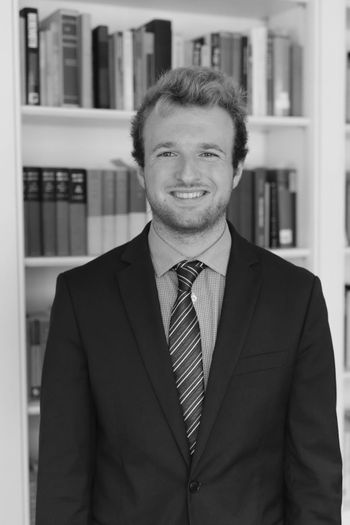
Aaron Stone, a postdoctoral fellow at UVA, is giving the Dec. 1 lecture.
Stone’s bio describes Stone as “a queer and trans studies scholar and narrative theorist whose research examines queer desires for form—that is, how queer and trans subjects organize their own lives and self-understandings (social forms) in relation to the structural affordances of stories about gender and sexual nonnormativity (narrative forms).”
Colleges and universities often teach students “queer” or “trans theory” through courses and lectures.
In January, the University of Louisville in Kentucky hosted a lecture called “Swamp Tales, Trans Ghosts, and Nonbinary Magical Realism.”
According to a description, the lecture brought together the “insights of Black ecologies and trans studies through a nonbinary analytic to raise questions about the coloniality of climate (change) and being” and “how Black and Indigenous queer, trans and nonbinary artists and activists are redefining the terms of their difference.”
In March, the University of California, San Diego organized a lecture titled “Black Queer/Trans Art in the Afterlife of Slavery.”
The university hosted Che Gossett, the Associate Director of the Center for Research in Feminist, Queer, and Transgender Studies at the University of Pennsylvania.
Campus Reform contacted the University of Virginia, Department of Women, Gender & Sexuality, and Aaron Stone for comment. This article will be updated accordingly.